
 English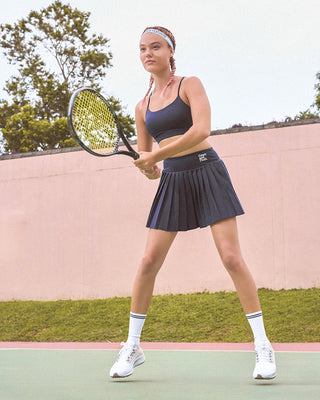
Prepare for Your First Tennis Match: A Beginner’s Guide
If you're interested in picking up tennis, here are 6 essential preparation tips for first-timers. These insights come from Aor Boonjira, who played as a child and recently returned to the sport as a working adult, consistently practicing for over six months.
Read this before heading to the court for the first time to ensure you start correctly, have fun, avoid injuries, and save money on unnecessary equipment.
1. You Need a Coach—Don’t Just Wing It
Unlike running or badminton, where you can rely on instinct at the start, tennis is more like golf or surfing—you need to learn the fundamentals before you can successfully rally with friends. Most courts have resident coaches. You can ask the facility for coach profiles to book a session that fits your needs.
2. Understand the Average Cost of Tennis Courts
Tennis courts come in two main types: outdoor and indoor. Outdoor courts in Thailand are generally much more affordable (starting at around 200 THB [6 USD] per hour). Indoor courts are more expensive (starting at around 400 THB [13 USD] per hour). Typically, if you play after 6:00 PM, there is an additional lighting fee of approximately 50–100 THB [a few USD] per hour, depending on the venue.
If you are not in Thailand, check prices with your local tennis courts.
Choosing a court at a price point you’re comfortable with will allow you to practice more often. As you improve, the game becomes even more enjoyable.
3. Choose the Right Time and Venue for Your Climate
Tennis is a high-energy, high-sweat sport. If you are in a tropical climate like Thailand, outdoor courts are not recommended during peak sun hours (such as noon), as the extreme heat and dehydration can lead to dizziness or fainting.
The ideal times for outdoor courts in hot climates are early morning until 9:00 AM, or late afternoon from 5:00 PM onwards. Since these prime slots are often booked by regulars, finding a vacancy can be challenging. Many people opt for indoor courts instead, as they allow for play at any time regardless of the sun.
For indoor courts, look for venues with good ventilation. Today, air-conditioned tennis courts are also an option. Without proper airflow, indoor courts can become very stuffy and oppressive, making the game a struggle rather than a joy.
If you are in a cold climate or a different season, avoid playing when the ground is wet or slippery (rain, snow, or melting ice). Avoid extreme cold that can affect your body, and never play in heavy fog that obstructs your vision.

4. Don’t Buy a Racket or Balls Yet—Try Them First
It is not recommended to buy a racket before you even start. A single tennis racket has many technical details, including grip size, head size, string tension, and the type of overgrip used. These details won't make sense until you’ve actually tried playing.
If you learn with a coach, they will usually have rackets for you to borrow. This allows you to discover what weight and size suit you best. A coach can provide expert advice on choosing the right racket once you decide to play regularly.
As for tennis balls, using brand-new ones can actually make the game less fun for beginners. New balls are very "bouncy" and fast. Beginners are better off with used balls because they are slower and much easier to control. We recommend renting a basket of balls from the court (usually starting at 50 THB in Thailand [1-2 USD]). This saves you from constantly having to pick up balls and ensures you are practicing with balls suited for your skill level.
5. Tennis Shoes Are Not the Same as Running Shoes
You should not use running shoes for tennis. Running shoes are designed specifically for forward motion, whereas tennis involves constant lateral (side-to-side) movement. Using running shoes increases the risk of rolling your ankle.
How to choose tennis shoes?
Try them on and practice moving side-to-side. See if the shoes feel supportive during lateral shifts. Everyone’s foot shape and movement style are different; for example, someone who runs up to the net frequently needs different support than someone who stays at the baseline. From the image, you can see that different models cater to different movement patterns.

Different tennis styles require different support: ASICS
6. Prepare the Right Outfit for Maximum Fun
Your tennis outfit must be breathable and allow for easy movement. Since tennis is an outdoor-heavy cardio sport, clothing that moves with you is essential.
//Read the detailed guide on choosing tennis outfits by Maye.
Shop Wakingbee tennis wear featuring innovative CoolFit breathable fabric.


This article was:
Written by: Aor Boonjira, who played tennis as a child and returned to the sport as an adult.
Edited by: Tungmay - Chalakorn Berg
Supported by: Wakingbee, Thailand's #1 activewear brand in Tungmay’s heart, encouraging everyone to enjoy exercise safely in beautiful, supportive wear—as seen in this article.